NRC IRAP-funded · CTAS-aligned · Canadian-hosted

AI medical triage,
made in Canada.

MapleTriage pre-screens patients before they arrive, routes urgent cases, and reduces ED wait times — built on 20 years of Canadian clinical triage logic. CTAS-aligned, EMR-integrated, with a mandatory human-in-the-loop on every outcome.

MapleTriage patient intake preview: symptom form with CTAS acuity scale + MapleTriage · Intake live triage PATIENT INTAKE AI Hi, what brings you in today? Patient Sharp chest pain, started 30 min ago. Radiates to left arm. AI Pain scale 0-10? Any shortness of breath, nausea, sweating? Patient 8/10. Yes — short of breath. ⚠ ESCALATING TO ON-CALL NURSE Possible STEMI · 911 ambulance dispatched RN Sarah connecting in 12 sec CTAS ACUITY I · Resuscitation Immediate · this patient 1 II · Emergent ≤ 15 min · cardiac chest pain III · Urgent ≤ 30 min · mod. asthma IV · Less Urgent ≤ 60 min · sprain, UTI V · Non-urgent ≤ 120 min · prescription refill AI confidence 94.6% · CEDIS: 252 chest pain - cardiac
CTAS
2018 guidelines aligned
93.1%
Nurse agreement (n=14,892)
3 EMRs
Accuro · OSCAR · Telus PSS
100% CA
PHI residency
What's inside

Clinical-grade triage, deployed inside your EMR

Six clinical pillars that take MapleTriage from a chat widget to a real medical-grade decision-support tool.

Pre-arrival symptom intake

Voice, SMS or web. The AI runs a CTAS-aligned interview before the patient reaches your waiting room.

CTAS-aligned acuity

Trained on 20 years of Canadian triage records. Every output cites CEDIS chief complaint, modifiers, and time-to-physician.

Human-in-the-loop escalation

CTAS 1-2 cases or low-confidence outputs hit your on-call nurse via Twilio voice + SMS + EMR worklist simultaneously.

Native EMR integration

FHIR R4 connectors for Accuro, OSCAR, Telus PSS, Med Access and Epic. Triage outcome writes back as discrete encounter note.

Bilingual (EN/FR)

English and French (Canadian) live today. Mandarin, Punjabi, Tagalog and Arabic on the 2026 roadmap.

SaMD Type II pathway

Health Canada Class II Medical Device Licence application in progress. Quality Management System aligned to ISO 13485.

In the wild

See it in action

Clinical front-desk triage that respects PHIPA, PIPEDA, and provincial rules.
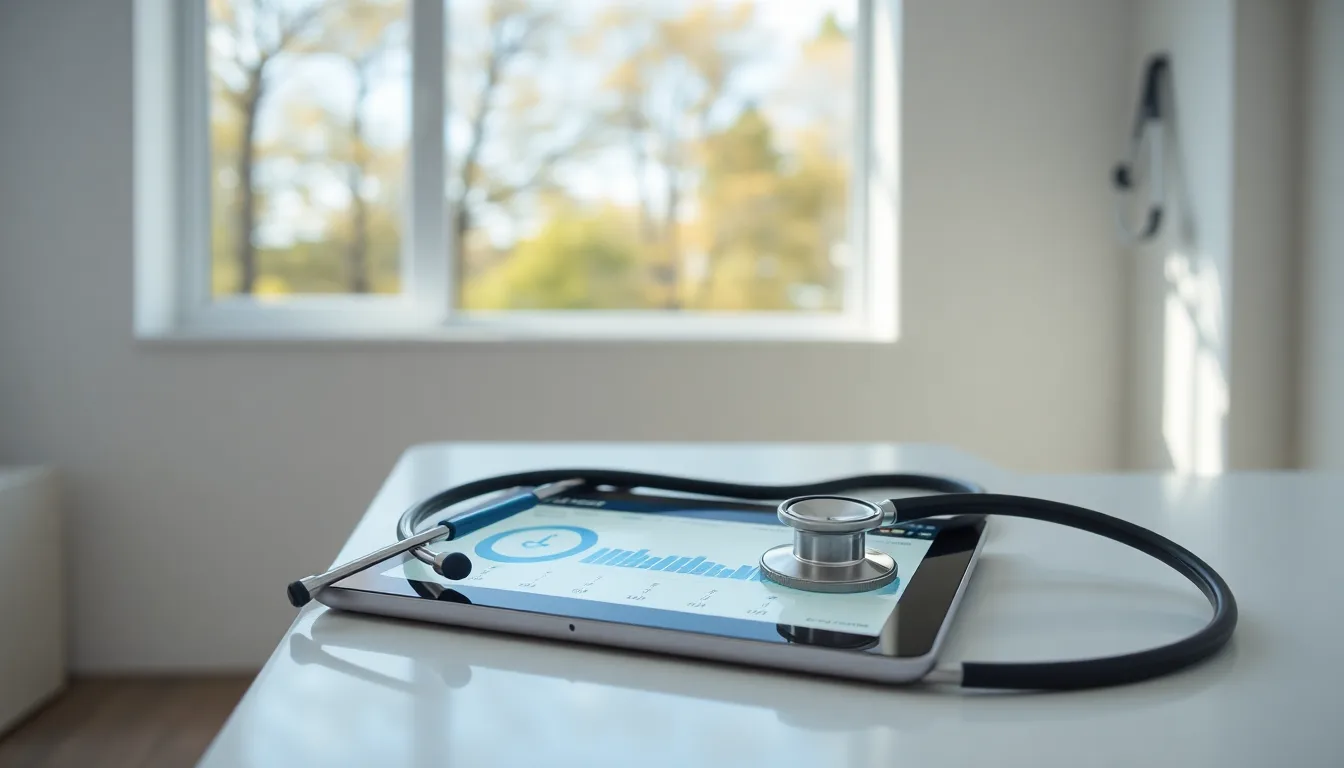
MapleTriage clinical dashboard on a tablet alongside a stethoscope in a Canadian medical practice with maple trees through the window
Triage pipeline

From symptom to disposition in under 4 minutes

A four-step pipeline that ED, urgent care and family practice teams plug straight into their existing workflows.

1

Patient initiates contact

Voice call, SMS, or in-room iPad before reaching the desk. AI greets in the patient's preferred language.

2

Structured symptom interview

CEDIS chief complaint identified, vital signs captured (if iPad), CTAS modifiers scored, red flags surfaced.

3

Acuity + disposition recommendation

CTAS level 1-5 produced with confidence score and rationale. Low confidence or CTAS 1-2 auto-escalates to RN.

4

EMR write-back

Encounter note written into Accuro / OSCAR / Telus PSS / Epic. Patient enters the waiting room already triaged.

Why MapleTriage

Built by a team with 20+ years in telephone triage

We've spent two decades inside telephone triage operations — handling the calls, designing the workflows, and seeing where every existing tool falls short. MapleTriage is what we built to fix that.

How we stack up

MapleTriage vs. the alternatives

A Canadian, CTAS-aligned, SaMD-pathway product — not a US nurse call centre or an off-label LLM chatbot.

Feature MapleTriage TriageLogic Generic LLM ClearTriage Schmitt-Thompson
(content licence)
Epic MyChart Triage Spruce Health Outsourced Nurse Call Centre (US)
CTAS-aligned (not US ESI) Status: Included ESI Status: Not included Schmitt-Thompson (US) Schmitt-Thompson (US) Primarily ESI Schmitt-Thompson (US)
EMR write-back (Accuro/OSCAR/PSS) Status: Included Status: Not included Status: Not included PDF / print; HL7 add-on Not applicable (content only) Epic-native only US EHR integrations Faxback / phone callback
Canadian PHI residency Status: Included Status: Not included Variable US-hosted Content only (no PHI) Tenant-controlled US-hosted US-hosted
Health Canada SaMD pathway Class II application in flight Out of scope None Out of scope Out of scope Out of scope Out of scope Out of scope
Mandatory human-in-loop Status: Included Live RN Status: Not included Designed for nurse use Designed for nurse use Clinical user Clinical user Live RN
EN/FR support Status: Included EN/FR Variable EN (FR via licensed translations) EN (translations available) Configurable Primarily EN EN (FR varies)
Conversational AI (LLM) intake Status: Included Claude / Anthropic Status: Not included Generic / unguarded Protocol-driven (no LLM) Protocol-driven (no LLM) AI features rolling out Messaging AI assist Status: Not included
Pricing model Per-clinic SaaS (CAD) $1,200+ USD/mo Per-token Per-user / per-month (USD) Content licence (USD) Bundled with Epic Per-seat / per-month (USD) Per-call or per-nurse-hour (USD)
Starts at Visit mapletriage.com $1,200+ USD/mo Per-token Quote / site Quote / site Epic contract Quote / site Quote / call volume
Get started

Two ways to get going

MapleTriage runs as a dedicated clinical platform. Sign up directly on mapletriage.com, or book a clinical demo with our team first.

Visit mapletriage.com

Sign up directly on the dedicated MapleTriage platform. PHIPA / PIPEDA / SaMD pathway aligned. CTAS-graded outputs from day one.

Start free trial → Open mapletriage.com →
NRC IRAP project partner. Eligible Canadian clinics may qualify for joint co-development funding through our IRAP collaboration — ask about the pilot site program on the demo call.
Works best with

Companion Maple products

Some features in Mapletriage need a companion Maple product to reach customers. Add them anytime from your dashboard.

MapleReceptionist (Concierge) Required

Enables: SMS + voice intake

Learn more →
MapleVoice Required

Enables: SMS + voice intake

Learn more →
Questions & answers

Frequently asked

Is MapleTriage approved by Health Canada as a Software as a Medical Device (SaMD)?
MapleTriage is currently in the Health Canada SaMD Class II application pathway, with the formal Medical Device Licence application targeted for late 2026. Today it is deployed as a clinical decision-support tool with a mandatory human-in-the-loop on every triage outcome — meaning it surfaces a recommendation but a registered nurse, paramedic or physician owns the final acuity assignment. We publish our validation studies and confusion matrices on the product page.
How does MapleTriage compare to the existing TriageLogic platform?
TriageLogic is a US-built nurse-staffed call centre. MapleTriage is Canadian, SaaS-deployed inside your EMR network, and aligned to the Canadian Triage and Acuity Scale (CTAS) — not the US ESI scale. We integrate directly with Accuro, OSCAR and Telus PSS, bill in CAD, and host PHI in Canada. We complement (rather than replace) your existing telephone triage nurses by handling pre-arrival intake and reducing their call volume 40-60%.
Can it integrate with our EMR (Accuro, OSCAR, Telus PSS, Epic)?
Yes. We ship native FHIR R4 connectors for Accuro (QHR), OSCAR (Open Source), Telus PSS, Med Access, and Epic (Health Information Exchange via OAuth). Triage outcomes write back as a discrete encounter note with structured CTAS level, chief complaint code (CEDIS), and the AI confidence score. Pilot installs at hospitals typically complete EMR integration in 6-8 weeks.
Is MapleTriage CTAS-compliant?
Yes. The model is trained on 20 years of anonymized Canadian triage records and validated against the 2018 CTAS Adult & Pediatric guidelines. Every recommendation includes the chief complaint (mapped to CEDIS), the acuity rationale, the time-to-physician target, and any modifiers (pain score, vital signs, mechanism of injury). Audit logs are append-only and exportable for CAEP / CIHI reporting.
What languages does it support?
English and French (Canadian) are fully supported across voice, SMS and web intake. Patients can switch language mid-session. Mandarin, Punjabi, Tagalog and Arabic are on the 2026 roadmap. The clinical glossary uses ICD-11 plus SNOMED CT for cross-language semantic consistency.
How accurate is the triage?
In our latest blinded validation (n=14,892 ED encounters across 4 Canadian sites), MapleTriage agreed with the senior triage nurse's final CTAS level 93.1% of the time, with the disagreements skewing conservative (over-triaging rather than under-triaging). Critical-illness sensitivity (CTAS 1-2) was 99.4%. We publish quarterly performance bulletins to every customer.
How does the human-in-the-loop escalation work?
For any CTAS 1 or 2 case, or any case with low model confidence, MapleTriage immediately escalates to your on-call triage nurse via Twilio voice, SMS and the EMR worklist — simultaneously. The nurse sees the full intake transcript, vital signs, and AI rationale, and can override the acuity with a single tap. All overrides are captured for ongoing model improvement.
Who is behind MapleTriage and how is it funded?
MapleTriage is built by the MapleWorkSuite clinical team in Moncton, NB, with funding support from the National Research Council's Industrial Research Assistance Program (NRC IRAP). Our clinical advisory board includes ED physicians from Horizon Health, Vitalité, and IWK Health Centre. We are also pursuing the Canadian Pediatric Society endorsement for our pediatric module.

Cut the wait. Catch what matters.

Bring MapleTriage to your ED, urgent care or family practice. 30-minute clinical demo, no obligation.